Building a machine learning model is not only about fitting an algorithm and hoping for good results. A proper workflow matters just as much as the model itself. In this project, I used a Random Forest Classifier within a structured pipeline that covers data preparation, dataset splitting, hyperparameter tuning, evaluation, and interpretation. The goal was to keep the process clean, reproducible, and easy to extend.
The workflow begins with importing the essential libraries. pandas is used for loading and handling the dataset, while scikit-learn provides the tools needed for preprocessing, model training, tuning, and evaluation. This includes utilities for splitting the data, filling missing values, building pipelines, running randomized hyperparameter search, and measuring model performance.
The dataset is then split into three parts: 80% for training, 10% for validation, and 10% for testing. The training set is used to fit the model, the validation set helps check performance during development, and the test set is kept untouched until the final stage to provide a more reliable estimate of how the model performs on unseen data.
Preprocessing is included to make the pipeline more robust. Missing values are handled with SimpleImputer, which replaces them using the median of each feature. If categorical features are present, encoding is applied to convert them into numeric form so the model can work with them properly. A key detail here is that the encoding is fit only on the training data, which helps prevent data leakage and keeps the evaluation process fair.
To keep everything organized, preprocessing and modeling are combined into a single Pipeline. This makes the workflow cleaner and ensures that the same transformations are applied consistently during training, validation, and testing.
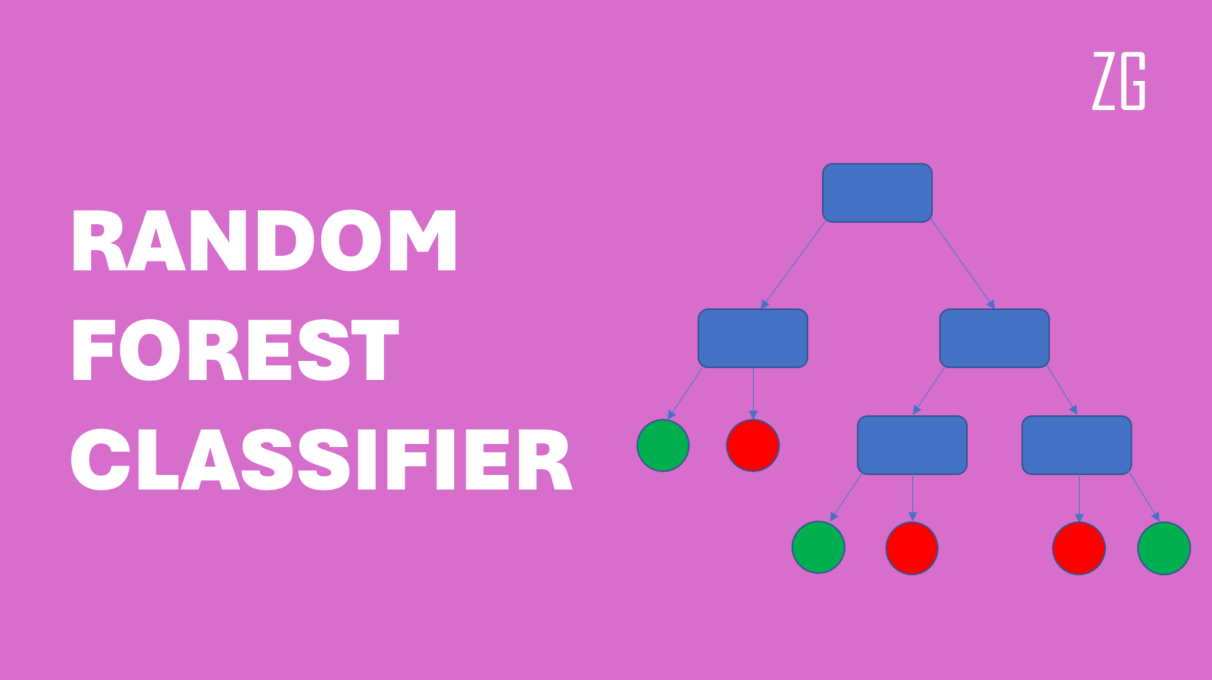
The classifier used here is RandomForestClassifier, an ensemble method that combines many decision trees and makes predictions through majority voting. Random Forest is a strong choice for classification tasks because it can capture complex patterns, handle feature interactions well, and often performs strongly without heavy assumptions about the underlying data distribution.
Instead of using an exhaustive grid search, hyperparameter tuning is done with RandomizedSearchCV. This approach tests a limited number of random parameter combinations rather than checking every possible one, making it much more practical and computationally efficient. It helps find a strong model configuration while avoiding the heavier cost of full grid search, especially on a local machine.
To make the tuning process more reliable, cross-validation is used during randomized search. The training data is divided into multiple folds, and the model is trained and evaluated repeatedly across them. This gives a more stable estimate of performance and reduces the risk of selecting hyperparameters based on one lucky split. Since the classification setup is balanced and straightforward, accuracy is used as the main optimization metric.
Once the best configuration is found, the final model is evaluated on the training, validation, and test sets. Metrics such as accuracy, confusion matrix, and classification report help show not only how well the model performs, but also whether it generalizes properly beyond the training data.
The final step is feature importance analysis. Since Random Forest can estimate how much each feature contributes to prediction, it becomes possible to identify which variables are most influential in the model’s decisions. This adds a useful interpretability layer to the overall workflow.